Camera placement for reliable number-plate recognition
Where to mount a camera for automatic number-plate recognition (ANPR), how to set it and how to test it, so that plates can be read by day, at night and in rain.
Recognition software can only read the characters that the camera delivers. If a plate is too small, blurred, sharply skewed or washed out in the picture, software settings can do little to recover it.
Plate capture is a camera problem first
A general surveillance camera is set up to show a whole scene. A plate camera has a narrower job: a sharp, well-lit picture of one plate as the vehicle passes one point on the road. One camera rarely does both jobs well.
Reading problems found after installation often trace back to where the camera was mounted and how it was set. Both are cheaper to settle at the survey than to change once poles and cabling are in place.
- Applies to
- Traffic enforcement, entry and exit gates, car parks
- For evidence
- One plate camera for each lane, plus an overview camera
- Before acceptance
- Test by day, at night and in rain
What the camera has to deliver
Settle these six points for each camera at the site survey.
- Horizontal angle
- Point the camera along the direction of travel, as close to straight on as the site allows. Seen from the side, the characters narrow and crowd together. A mount above the lane keeps the angle small.
- Vertical angle
- A steep downward view squashes the characters, and a bumper can hide part of the plate. A camera mounted too low looks into headlights, and one vehicle can hide the plate of the next. Aim for a moderate downward view.
- Mounting height and distance
- Height and distance together set the vertical angle. Choose the point on the road where plates are to be captured. Then choose the height and the lens for that point, and lock the focus and zoom.
- Pixels across the plate
- Recognition software needs a minimum number of pixels across the width of the plate. Measure it in a still frame from the installed camera, with a vehicle at the capture point. A wide view of several lanes rarely gives each plate enough.
- Shutter speed
- A vehicle keeps moving while the shutter is open, so a long exposure smears the characters. Use a short exposure time and cap it, so that automatic exposure cannot lengthen it as the light fades. Short exposures need more light.
- One lane per camera
- Where reads will be used as evidence, give each lane its own camera. A vehicle in the next lane is less likely to hide the plate, and each read belongs to a known lane. Overlap neighbouring views slightly for vehicles that straddle the line.
Design to the vendor's figures
Ask the recognition vendor for the minimum plate width in pixels, the largest angles and the highest vehicle speed that the software is specified for. Design each camera position to those figures, with some margin.
Night, weather and the plates themselves
Some conditions cannot be chosen. Plan for them, and decide in advance what happens to a plate that cannot be read.
| Condition | What happens in the picture | What helps |
|---|---|---|
| Darkness | Too little light for a short exposure, so the plate is dark or blurred. | An infrared lamp beside the camera, matched to the capture distance so that the plate is neither dim nor washed out. Reflective plates return this light strongly. |
| Headlight glare | Headlights point straight at a camera that reads front plates. Exposed for the whole scene, the picture can show a white flare over the plate. | Infrared capture through a filter that blocks visible light, with the exposure set for the plate, not the scene. |
| Rain and spray | Wet roads mirror lights. Spray softens the picture, and drops on the housing blur part of it. | A hood over the camera window, and regular cleaning. |
| Dirt and damage | Mud, faded paint, a bent plate or a tow bar can hide characters. Camera position seldom brings them back. | A picture clear enough for a person to read, and a review step for doubtful reads. |
| Plate variety | Plates differ in size, colour and layout: one line or two, old styles and new, on cars, lorries and two-wheelers. | Zoom and focus set for the smallest plate expected, and a test with the vehicles that use the road. |
Keep the context with each read
A plate on its own shows which vehicle passed. An evidence record usually needs more: what the vehicle was doing, and when.
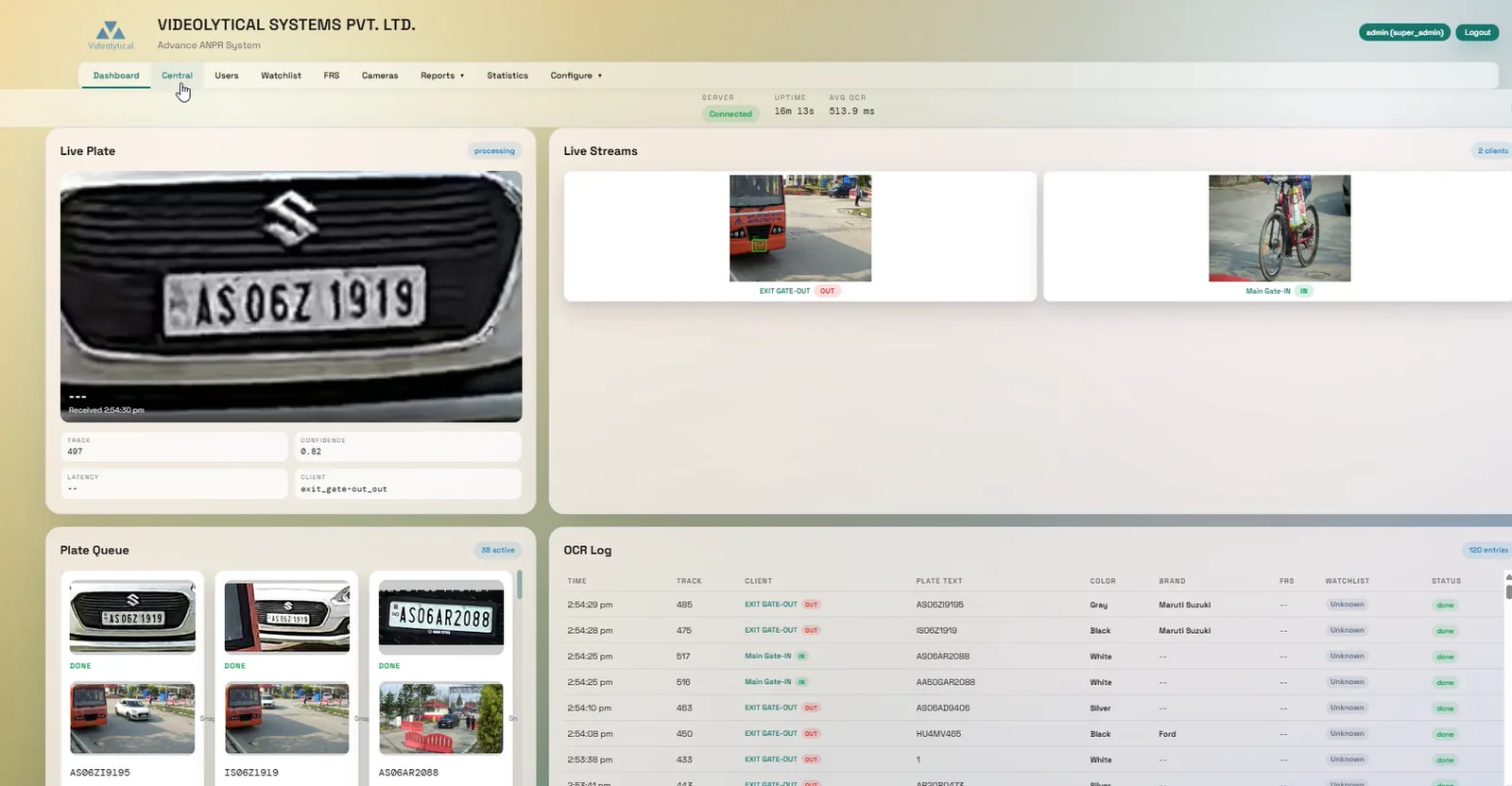
Add an overview camera
A plate camera is zoomed in on one lane and shows little beyond the plate. At night its infrared picture is black and white. An overview camera records the scene at the same moment: the vehicle, its colour, its lane and what it did. For enforcement, the two pictures are typically kept as one record.
Synchronise the clocks
The plate camera, the overview camera and the server that stamps each read should share one time source. If the clocks drift apart, pictures of one vehicle carry different times and the record is harder to rely on. Check the clocks after a power cut or a network change.
Test at night and in rain
A demonstration on a dry afternoon shows the easiest case. Test each camera in its working conditions before the system is accepted.
-
Define a correct read
For example, every character right on the first pass. Write it down before testing starts.
-
Record real traffic
Record each camera by day, at dusk, in darkness and in rain. Include the busiest period.
-
Read the plates by eye
A person notes the plate of each vehicle in the recordings. That list is the reference.
-
Sort the errors
Separate plates that were never captured from plates that were misread. The first kind often points to position or lighting, the second to plate size or blur.
-
Fix the camera first
Correct aim, zoom, exposure and lighting before changing software settings. Then repeat the test.
How Videolytical approaches this
ANPR and Vehicle Intelligence, the Videolytical product for number-plate recognition, reads plates by day and night and is tuned for Indian plates. Videolytical trains and hardens its models for field conditions such as glare, dust, monsoon rain and low light.
A rollout starts with a site survey and camera audit, and a pilot on a small set of cameras comes before scale-out with calibration. For traffic enforcement, the product provides plate-linked evidence for e-challan (electronic traffic penalty notice) workflows.
See plate recognition on your own footage
Send a sample clip or arrange a live demo. For a new site, ask for an architecture and sizing discussion.