Industries

The same video management software (VMS) and video analytics run in city traffic systems, defence control rooms, airport terminals, stores and factories. Each sector switches on the detections it needs.

Works with
Existing IP cameras and recorders over ONVIF and RTSP
Deployment
Edge, on-premise or cloud, mixed in one estate
Delivered with
OEMs, security solution providers and system integrators

Sectors at a glance

Where the cameras usually are in each sector, and what the software does with them. The sections below give the detail.

Sector Where the cameras are What the software does
Smart cities Highways, junctions, markets and public places Detects traffic violations and links each one to a number plate. Monitors crowds in public places.
Defence Perimeters and control rooms of bases and cantonments Raises perimeter intrusion alerts. Runs video walls and a map view on an air-gapped network.
Airports Terminals, railway stations and bus depots Flags unattended baggage and crowd build-up. Groups the cameras of each zone on one console.
Retail Store aisles, entrances and billing counters Shows where shoppers walk and wait. Counts footfall and alerts on queue length.
Industrial Production lines, docks, gates and yards Checks personal protective equipment (PPE) and danger zones. Counts movement in and out.

Smart cities and traffic

A city has more junctions and public places than officers to watch them. A traffic violation is over in seconds, and a penalty needs evidence that ties the offence to a vehicle.

Highway and junction enforcement
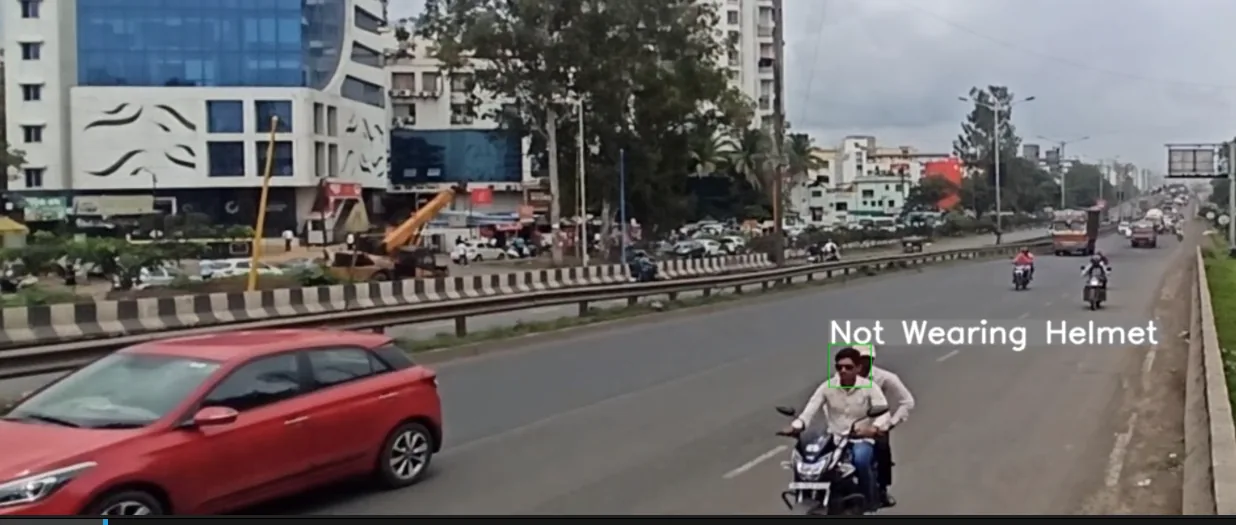
Cameras detect riders without helmets, triple riding and wrong-way driving, by day and by night.
Evidence for penalty notices
Automatic number-plate recognition (ANPR), tuned for Indian plates, reads the vehicle's plate. Each violation becomes a plate-linked evidence record for the e-challan (electronic traffic penalty notice) workflow.
Stolen and flagged vehicles
Plates are matched against a watchlist. A stolen or flagged vehicle raises an alert when a camera reads its plate.
Public places and markets
Crowd monitoring reports density, flow and suspicious behaviour. Face recognition can match faces against a watchlist in real time.
Command centre feeds
Alerts and live views reach traffic police dashboards and the city's integrated command and control centre (ICCC).

Read the smart city case study

Defence and paramilitary

Sensitive sites often run on networks with no outside connection. Perimeters are long, control rooms are staffed day and night, and operator actions have to be accounted for.
Perimeter watch
Intrusion detection uses tripwires and restricted zones along the perimeter of a base or cantonment.
Watchlist matching
Face recognition can match faces against a watchlist database in real time.
Video walls and alert handling
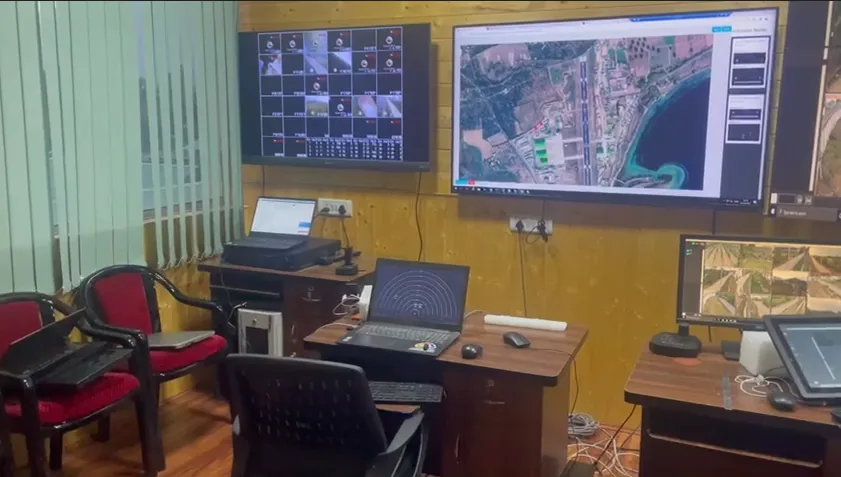
Operators arrange cameras on multi-monitor video walls with drag-and-drop layouts. Escalation workflows and standard operating procedure (SOP) prompts guide the operator's response to an alert.
Map correlation
Cameras and alerts are overlaid on a GIS (geographic information system) or satellite map. An operator sees where an event is, not only which camera saw it.
Air-gapped operation
Analytics run on on-premise servers and video stays inside the site network. Software and models are updated offline with signed packages.
Audit and access control
Alerts and operator actions are written to an audit trail. Access is set by role, for each camera and each function.

Read the defence case study

Airports and transport

Airport terminals, railway stations and bus depots are open to the public for long hours. Cameras are spread across halls, corridors, platforms and car parks, and security and operations teams share them.
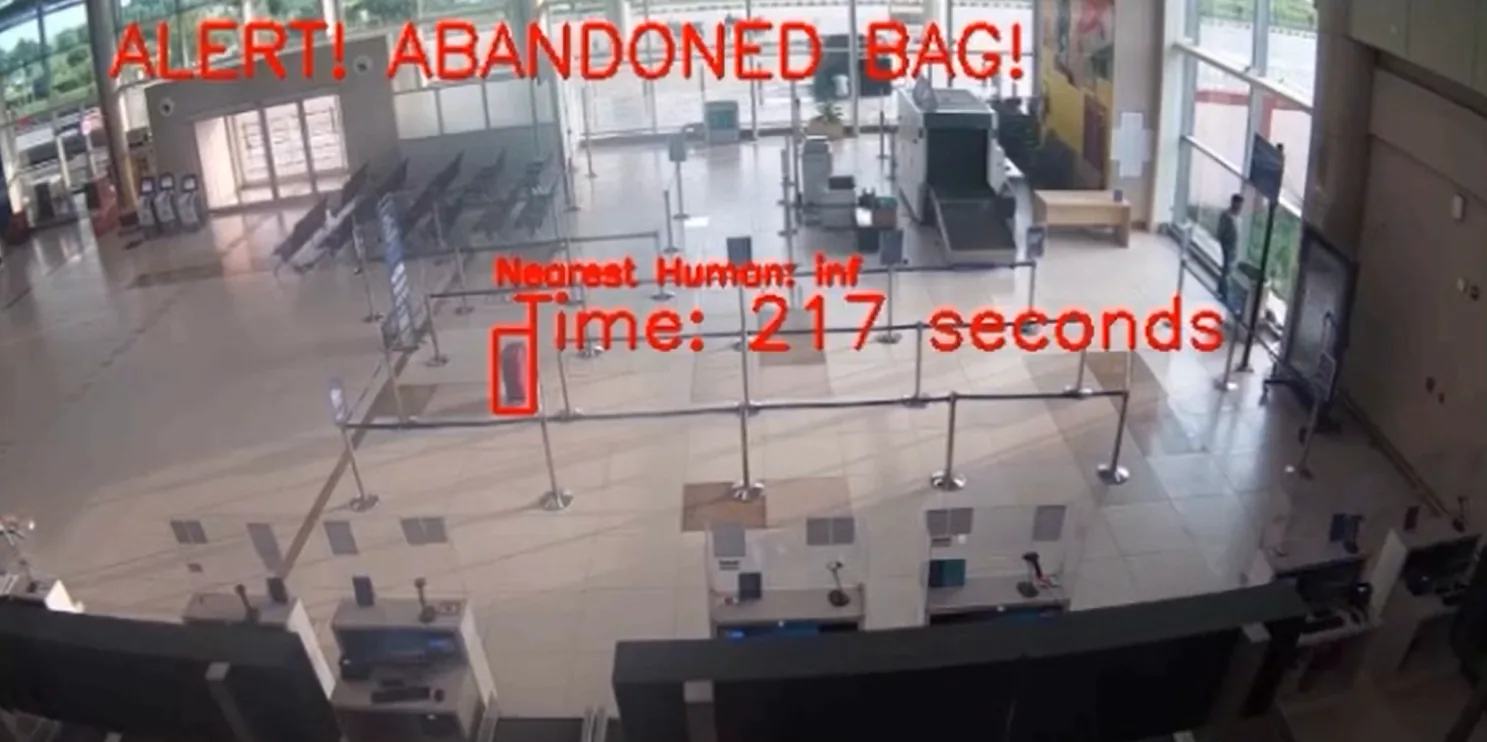
Abandoned bag alert, airport terminal Overhead camera view of a terminal hall. A red box marks a suitcase left alone in the queue area, under an on-screen abandoned bag alert.
The alert is drawn on the camera view. A red box marks a suitcase left alone in the queue area.

One console across the site

Cameras are grouped into views that follow the building, for example aerobridges, check-in, arrivals and airside corridors. Analytics alerts appear in the same console, with a video bookmark for replay.

  • Unattended-baggage alerts in terminal halls
  • Crowd monitoring on platforms and concourses
  • Number-plate recognition at parking and pick-up zones
  • Video synopsis to review long recordings

Read the airport case study

Retail and malls

Stores already have cameras for security. The same cameras can show how shoppers move through the store, where they stop and when queues build.
Heatmaps and dwell time
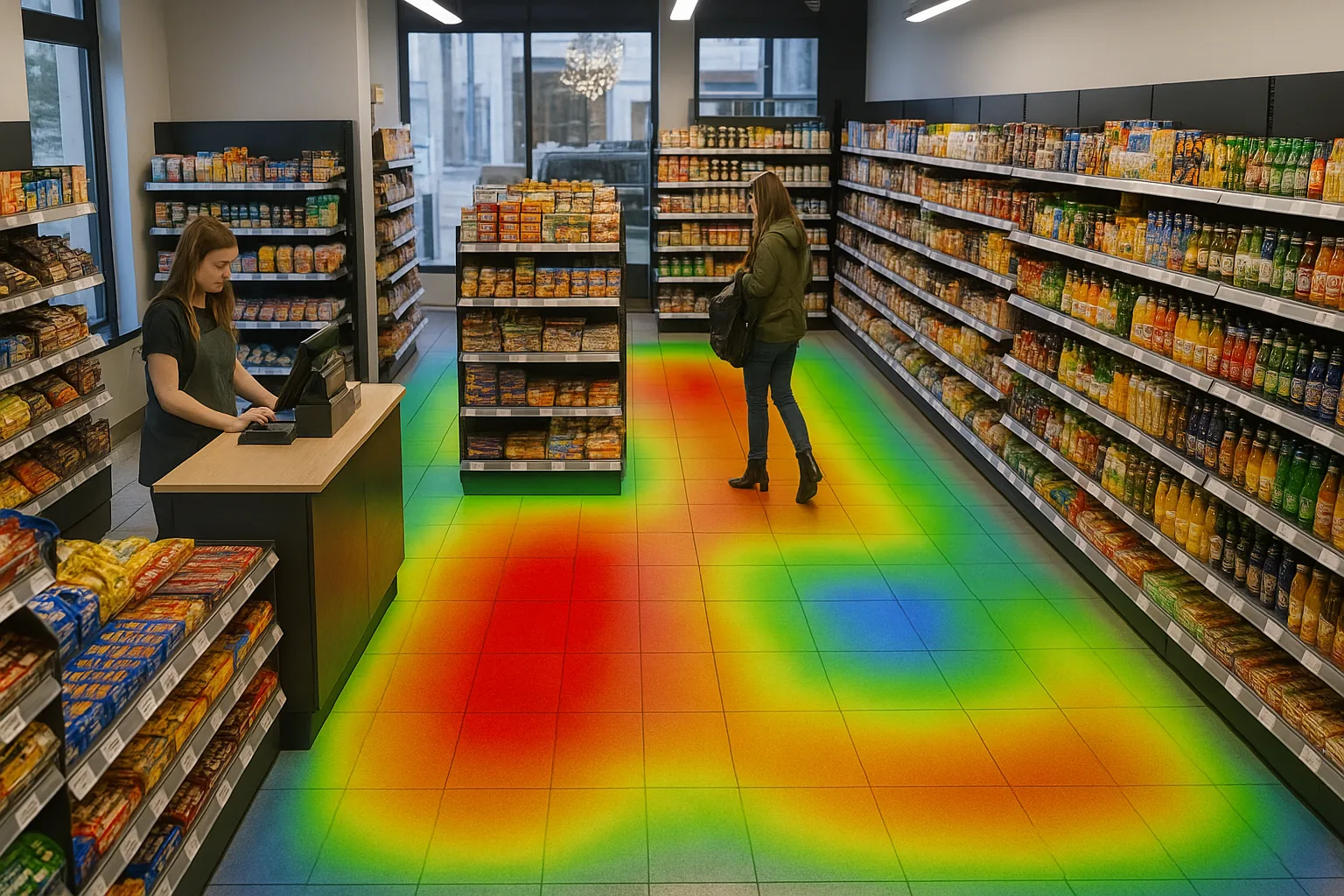
A heatmap shows movement density across the floor and how long people stay in each zone. Store teams use it to plan layouts, staffing and merchandising.
Footfall and queues
People counting gives in and out counts at each entrance. Queue-length alerts at billing counters tell a manager when to open another counter.
Loss prevention
Loitering detection flags a person who stays too long in a sensitive zone. Face recognition can match faces against a watchlist.
After-hours watch
Intrusion detection covers the store when it is closed.
Chains and multi-site estates
The cloud deployment option suits estates with many sites. It gives central dashboards, updates and storage.
Illustration of a small shop with a colour heatmap overlaid on the floor, red in front of the counter and along the aisle and blue in the middle.

Illustration: retail heatmap. A heatmap colours the floor by how much movement a camera has seen in each place.

Industrial and warehousing

On a shop floor, safety rules have to hold on each shift, not only when a supervisor is watching. At docks and gates, what goes in and out has to be counted, often at night.
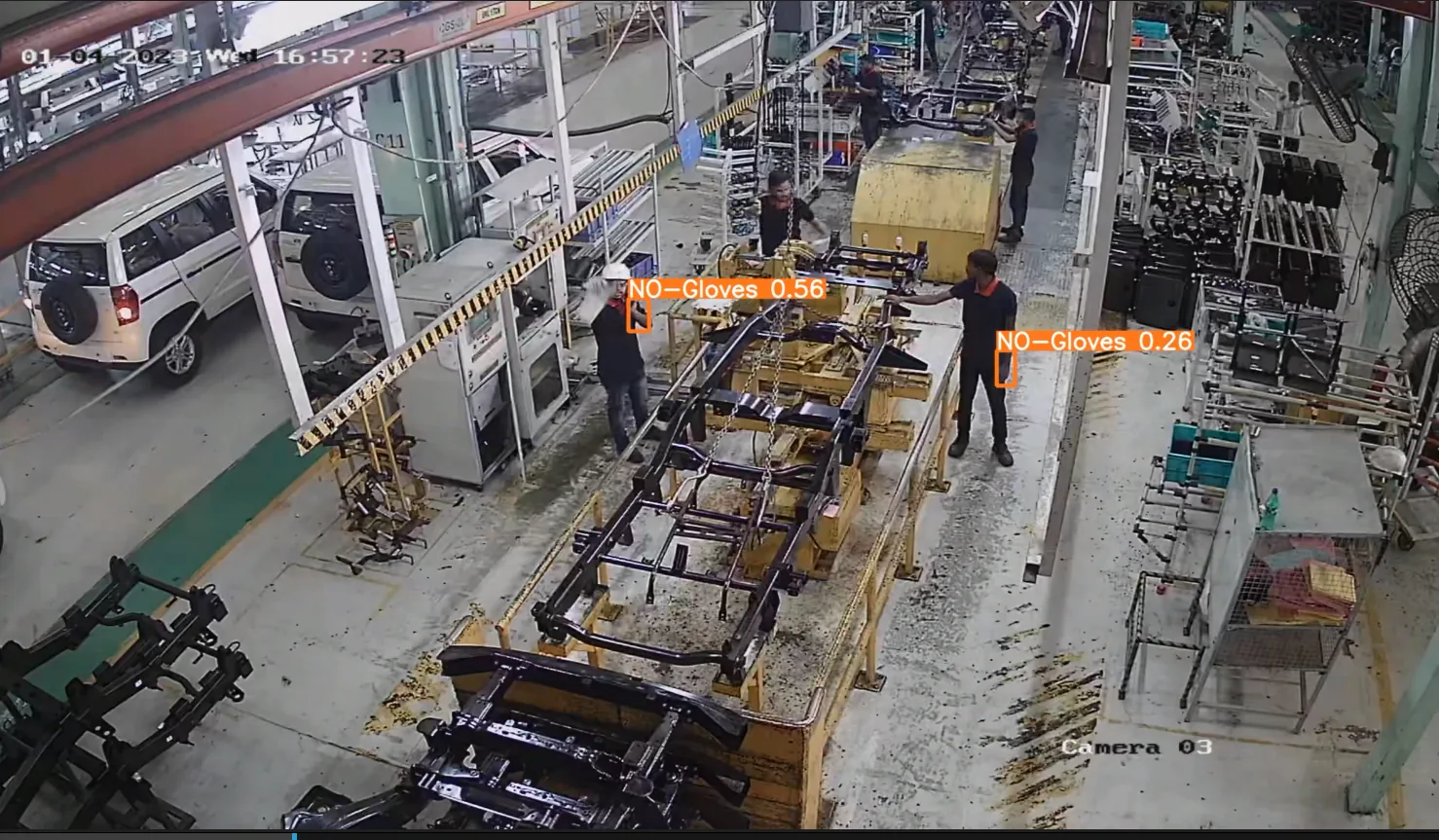
Missing gloves flagged, assembly line Overhead factory camera view of a vehicle chassis assembly line. Orange boxes mark the bare hands of two workers, each labelled "NO-Gloves".
Orange boxes mark the bare hands of two workers on an assembly line.

Safety on the floor, counts at the dock

The PPE compliance module checks for hard hats, vests, gloves and masks on production lines. People counting works in both directions across a line at a dock, gate or entrance.

  • Danger-zone alerts on shop floors
  • Intrusion detection in yards at night
  • Fire and smoke detection
  • Custom model training for site-specific objects

Browse by problem, product or platform

This page is arranged by sector. The same software is also described by the problem it solves, by product and by how it is deployed.

Solutions

Perimeter security, crowds, traffic enforcement, retail, industrial safety and warehousing, with the full list of analytics modules.

Products

VMS Enterprise, AI Video Analytics, Face Recognition, ANPR and Vehicle Intelligence, and Command and Control.

Platform

Deployment at the edge, on-premise or in the cloud, integration with cameras and other systems, and security.

See it on footage from your own site

Tell us the sector and what you need to detect. We can run a live demo on your own footage, look at a sample clip, or discuss a pilot.